About Evan Zoernack

Professional Background
I am an aviation civil infrastructure professional specializing in the technical planning, design coordination, and FAA-compliant delivery of airfield projects, with deep experience advancing these projects through federal and state grant programs. My work integrates FAA design standards, pavement and taxiway planning, and operational safety requirements with funding eligibility and capital programming constraints. I have led technical scope development for taxiway and runway development, ensured compliance with FAA Advisory Circulars and Airport Capital Improvement Program requirements, and translated complex engineering needs into fundable, constructible projects. Known for innovative problem solving in constrained public-sector environments, I regularly develop phased, cost effective design solutions that maintain airfield operations while meeting safety, regulatory, and lifecycle performance goals. I operate as a technical and strategic bridge between engineering teams, funding agencies, contractors, and airport leadership to deliver compliant, high-impact aviation infrastructure.
I excel at bridging the gap between designing technical projects, funding strategy, and public accountability, guiding complex aviation infrastructure projects from concept through execution. My experience includes leading multi-disciplinary teams of the engineering team, subcontractors, consultants, and client coordination to deliver projects such as taxiway and apron rehabilitation, pavement rehabilitation, airfield lighting upgrades, and obstruction mitigation. I have directed efforts to ensure compliance with FAA Advisory Circulars, CIP prioritization, and state aviation grant eligibility, while developing technical narratives, cost estimates, and phased construction plans. I leverage innovative problem solving approaches to address challenges .
Ocala International Airport – Taxiway C Design
Project Overview
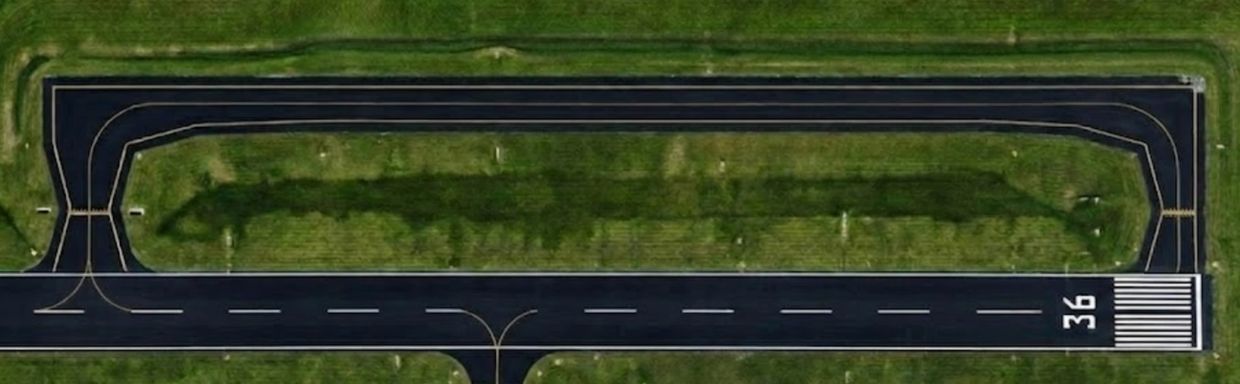
The intent of this project was to design improvements for a new parallel taxiway to the east of 18-36, identified as Taxiway C, and connector taxiways C1 and C3 at Ocala International Airport. Work included preparing the site and construction of a new full-depth flexible pavement taxiway approximately 2,200 feet long and 50 feet wide. Additional project components include managing the surface runoff and optimizing the design to facilitate future construction. Earthwork grades surrounding the Taxiways were designed to meet FAA grading requirements (AC 150/5300-12B). We evaluated tie-ins to Taxiway C1 and Taxiway C3 to the existing Runway 18-36 for fillet geometry and safety, and incorporated associated signing improvements to current standards. Total project value is estimated at $5,500,000.
The work centered on evaluating taxiway geometry, pavement structure, and functional role within the airfield system. I led analysis of rehabilitation versus reconstruction alternatives, as well as protecting potential utility conflict areas and developing cost savings where appropriate. Design discussions addressed grading transitions, surface drainage, edge conditions, and constructability within an active airfield, and the development of a construction safety and phasing plan that would result in minimal impact of loss of revenue during the construction process.
I served as the lead civil and aviation infrastructure project manager, owning major portions of technical scoping, FAA compliance alignment, grant strategy development, and multi-party coordination. I functioned as a primary interface between airport leadership, subcontractors, and funding agencies, and the FAA. The following is a list of team members involved in the supporting me in the development of this project:
- Geotechnical Engineering - Performed geotechnical investigations including SPT borings, pavement coring, CBR testing, and groundwater observations. Their reports define subsurface conditions and constraints that govern pavement section design and drainage assumptions.
- Structural Pavement Engineering - pavement design engineers prepared the pavement design recommendations using FAA FAARFIELD software in accordance with AC 150/5320-6G. This includes the evaluation of current and forecasted fleet mixes, selection of controlling aircraft, and final pavement thickness recommendations for Taxiway C.
- Surveying and Mapping - Completed the boundary, topographic, and control survey used for base mapping and grading design.
- Environmental Consultants - Species Survey & Environmental Studies - provided environmental support services for the project, including protected species surveys and environmental studies within the project limits.
A core responsibility involved shaping Taxiway C into a fundable project. I coordinated FAA AIP and FDOT Aviation grant requirements, defined eligible scope elements, and supported preparation of grant justification narratives. This included validating costs, phasing logic, and safety benefits to strengthen funding competitiveness. I was also able to provide expertise in alternative funding solutions that would be applicable to this project, such as the Florida Jobs Growth Grant Act, and advise the client on a strategy to obtain the grant for the construction of Taxiway C.
Technical Skills
FAA & State Aviation Grant Strategy
○ Includes cost justification and eligibility compliance
○ Planning, structuring, and executing projects with FAA AIP, ACIP, and FDOT funding
Civil Infrastructure Planning & Construction Phasing
○ Sequencing improvements in active airfield environments
○ Leading engineers, contractors, consultants, and airport staff
Regulatory Compliance & Safety Standards
○ Ensuring operational safety and adherence to airfield design criteria
○ 3D grading, corridor design, and surface analysis
○ Adhering to FAA Advisory Circulars and state aviation codes
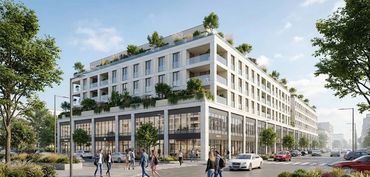
Architectural Visualization & Unreal Engine
○ Creating immersive 3D visualizations for presentations and outreach which support grant approvals
Innovative Problem Solving & Technical Leadership
○ Addressing complex airport infrastructure challenges
Airfield Design & Pavement Engineering
○ Grading, lifecycle analysis, and rehabilitation planning
○ Taxiway, runway, apron, and pavement layout
Stakeholder & Multi Company Coordination
○ Delivering complex projects on time while managing budget
○ Coordinating and designing site grading, drainage, and stormwater management
Advanced Civil 3D Modeling & Documentation
○ Production of detailed civil engineering deliverables
○ Developing cost effective, operationally feasible solutions

Innovation in Design - A Creative and Technical Approach Towards Solving the Hardest Questions
I used a data-driven approach to optimize the location of the proposed stormwater detention pond in order to minimize environmental impacts and construction costs. A custom surface representing available groundwater storage was developed in Civil 3D using geotechnical boring data, including groundwater levels, confining layer depths, and water quality requirements. This surface was compared directly to the existing ground surface to calculate the available vertical storage across the site.
The resulting difference analysis identified areas where stormwater storage could be achieved most efficiently, allowing the pond to be located where the water quality treatment zone and confining layer were deepest. This enabled the pond footprint to be minimized while still meeting regulatory requirements. The analysis was presented visually by mapping boring locations and color-coded storage zones, illustrating the basis for pond placement. This approach reduced excavation, limited environmental disturbance, and lowered overall project costs.
Architectural Visualization and concept rendering